Industry Knowledge
Security site assessment: how to survey a new site before you quote it
A security site assessment checklist for guard companies: what to ask, what to walk, and how to turn the visit into posts, post orders and a quote.
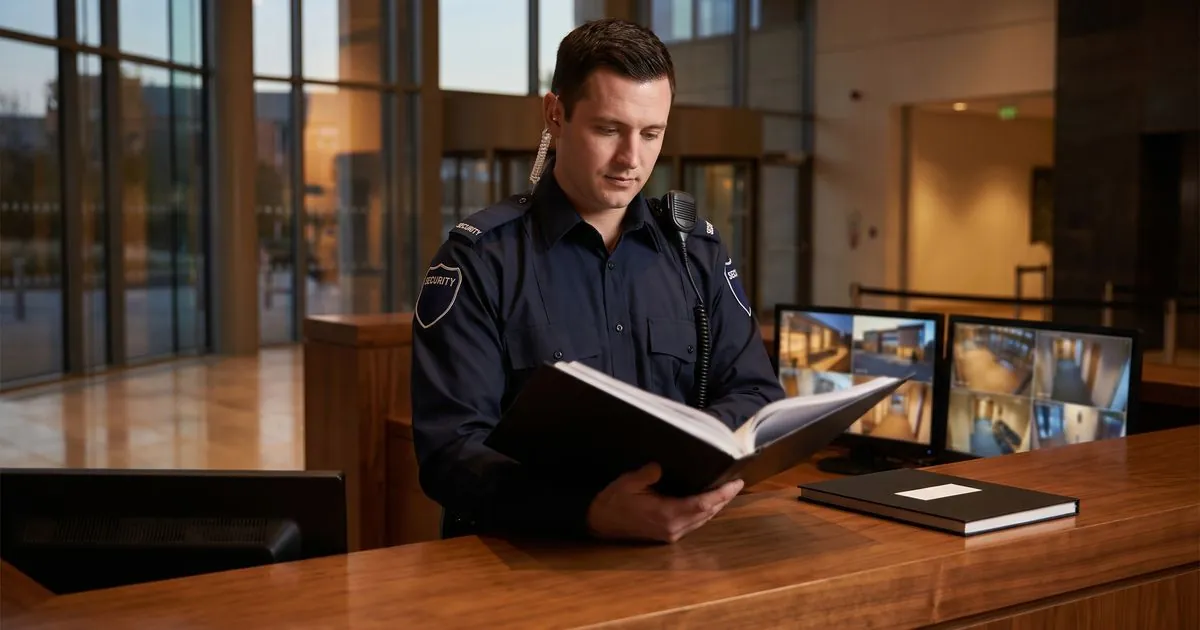
A security site assessment is the walk-through a guard company does before it prices a new site. It shows you where the risks are, how many posts and hours the site really needs, and what the officers will have to do. Done well, it becomes the backbone of both the post orders and the quote.
Key points#
- Ask the client what prompted the request before the visit, so you know which problem the officers must solve.
- Walk the site at the hours the officers will work, including at least one visit after dark.
- Record entry points, lighting, sightlines, people flow, existing systems and the risks to the officers themselves.
- Turn each finding into a post, a patrol checkpoint, a line in the post orders or an assumption in the quote.
- Leave legal and insurance questions to the client's attorney or insurer, not to your report.
Before the visit: what to ask the client#
A good assessment starts with a phone call or a short meeting. The goal is to arrive knowing what you are looking for.
- Why now? A recent break-in, tenant complaints, a new building, an insurance request or a lost vendor each point to a different job.
- What has happened before? Ask for the incident history, police calls and any reports from the current security provider.
- Who decides? Learn who signs, who will be your day-to-day contact and who else has a say, such as a property manager or a tenant.
- How does the site run? Ask for opening hours, shift changes, delivery times, events and the busiest days of the year.
- What is already in place? Cameras, alarms, access control, locks and any current guards.
- Can you get a site map? A floor plan or an aerial view helps you plan the walk and mark posts later.
Walk the site at the hours that matter#
A site in the middle of the afternoon is not the same site in the middle of the night. If the officers will work nights, walk it at night. If the risk is at shift change or closing time, be there then.
Bring a camera, the site map and a checklist. Walk the site the way an intruder would: from the street, around the fence line and through every way in.
The security site assessment checklist#
Entry points and the perimeter#
List every way in: front doors, side and emergency doors, loading docks, garage entrances, gates, roof hatches and windows at ground level. For each one, note whether it is used, who uses it, whether it locks, and who holds the keys, codes or badges. A door propped open for deliveries is a finding, not a detail.
Check the fence line, the gates and any gaps. Note where the property line is, so the post orders can say exactly which areas the officers cover.
Lighting#
Look for dark parking areas, broken fixtures, lights on timers that switch off too early and entrances that sit in shadow. Lighting matters: in a randomized experiment in New York City public housing developments, temporary streetlights led to at least a 36 percent drop in nighttime outdoor index crimes, an NBER working paper reported.
Put lighting problems in your findings as recommendations. They are the client's to fix, and fixing them may change how many officers the site needs.
Sightlines and hiding places#
Stand where an officer would stand and ask what they can see. Blind corners, stairwells, overgrown hedges, stacked pallets and dumpsters can all hide a person. Designers call this natural surveillance, one of the ideas behind crime prevention through environmental design (CPTED): a place is easier to protect when people can see what happens in it.
A post with a poor view may need a camera feed, a second post or a patrol route that passes the blind spot.
People and how they move#
Watch who comes and goes: employees, visitors, contractors, deliveries, residents and the public. Note the peak hours, where people wait, where cash changes hands and where alcohol is served. Ask whether anyone works alone, late at night or in an isolated part of the site.
These details decide the kind of officer the post needs. A lobby with a steady stream of visitors needs someone good with people and with visitor logs. A quiet warehouse at night needs someone alert who can walk a long patrol.
Existing systems#
For each camera, alarm and access control system, ask who watches it, who responds and what happens after hours. A camera nobody watches records an incident; it does not stop one. Note whether officers will be expected to watch screens, respond to alarms or let people in, because each of those is a duty that belongs in the post orders.
Check the mobile signal too, in basements, garages and stairwells. Officers rely on their phones to call for help and to file reports.
Risks to the officers#
Look at the site from the officer's side. Where will they stand, sit and take a break? Is there a restroom, shelter from the weather and a safe place to park? What is the route to help in an emergency? An assessment that ignores the officer's safety creates posts that are hard to keep staffed.
Risks that come with this kind of site#
Every type of site has its usual problems. A construction site worries about theft of tools and materials after hours. A store worries about theft and confrontations at the door. An apartment complex worries about trespassing and parking. A clinic has to plan for violence against staff. Ask the client which of these they have seen, and look for signs of them on the walk.
Turn what you saw into posts and hours#
Now decide how to cover the risks you found.
- Fixed posts. Where must an officer be at all times, such as a lobby desk or a gate?
- Patrols. What must be checked on a round, and how often? List the checkpoints: the doors, the loading dock, each parking level, the roof door.
- Hours. Which hours and days does each post need? A site may need two officers at closing time and one overnight.
- The officer. Armed or unarmed, and which license, training or skills the post requires. Licensing rules differ from state to state, so check with your state licensing agency.
- Supervision. Who checks on the officers, and how often?
Then build the schedule. A post that runs around the clock needs several officers to cover it without piling up overtime. The security guard schedule template shows how to staff a post like that, and scheduling is where those shifts live.
If you plan a patrol, choose the checkpoints while you are still on site. In Guardix, patrol checkpoints are NFC tags, QR codes or GPS points, and each one belongs to a post site. In the manager mobile app, a manager can add a GPS checkpoint right where they stand and choose its radius. NFC tags give the strongest proof.
What goes into the post orders#
The assessment is your first draft of the post orders. Each finding should end up as an instruction an officer can follow:
- Site contacts, emergency numbers and who to call after hours
- The hours and duties of each post
- The patrol route, its checkpoints and how often to walk it
- Access rules: who may enter, which doors stay locked, how to check visitors
- Key, code and badge control
- What to report, how and when
- What to do in a fire, a medical emergency, an alarm or a threat
- What the officer must not do
For a fuller list, see security post orders: what to include. In Guardix, managers write post orders for each post site, officers acknowledge them in the mobile app, and managers see who has acknowledged and who has not.
What goes into the quote#
The quote should show that it was written for this site.
- What you found. A short summary of the risks, in your own words.
- The scope. Posts, days, hours, duties, patrols and reporting.
- The assumptions. The hours, the number of posts, the officer type and anything the client agreed to fix, such as lighting or a broken gate.
- What is not included. So the client does not assume it is.
- Recommendations the client owns. Lighting, locks, cameras and landscaping that would make the officers more effective.
- The price. A rate built from your real costs, with the assumptions beside it.
The security proposal template walks through each section, and how to set billing rates covers the price. Send the proposal while the visit is fresh, and promise only the coverage you can staff.
Know where your assessment ends#
A guard company's assessment is practical: it plans coverage. It is not a legal opinion and it is not an insurance survey. If a client asks whether they meet a legal duty, refer them to their attorney or insurer.
Some clients have little or no security program at all. For facilities such as houses of worship, schools and community buildings, the CISA SAFE fact sheet describes a free walk-through by a trained assessor that looks at security management, entry control and perimeter security, and is meant to take no more than two hours. It can sit alongside your own visit.
Frequently asked questions#
What is a security site assessment?#
A security site assessment is a walk-through of a property to find its security risks and decide how to cover them. A guard company uses it to plan posts, hours, patrols and post orders, and to price the contract.
What should a security site assessment checklist include?#
It should cover entry points and the perimeter, lighting, sightlines and hiding places, how people move through the site, existing cameras and alarms, risks to the officers, and the risks that come with that type of site. Each finding should turn into a post, a checkpoint, a post order or an assumption in the quote.
How long does a security site assessment take?#
It depends on the site. A single small building can often be covered in one visit, while a large campus, a construction site or a site with night operations needs a day visit and a night visit. Plan enough time to walk every entry point.
Should a guard company charge for a site assessment?#
For a normal bid, the walk-through is part of the cost of winning the work. If a client wants a detailed written risk report for a large or complex site, you can price that as its own service and say so before the visit.
Sources#
- Site assessment
- Sales
- Post orders