Industry Knowledge
Lone security guard safety: a plan for officers who work a post alone
Lone security guard safety starts with a written plan: assess each solo post, set check-in times, define when to retreat and decide who responds to silence.
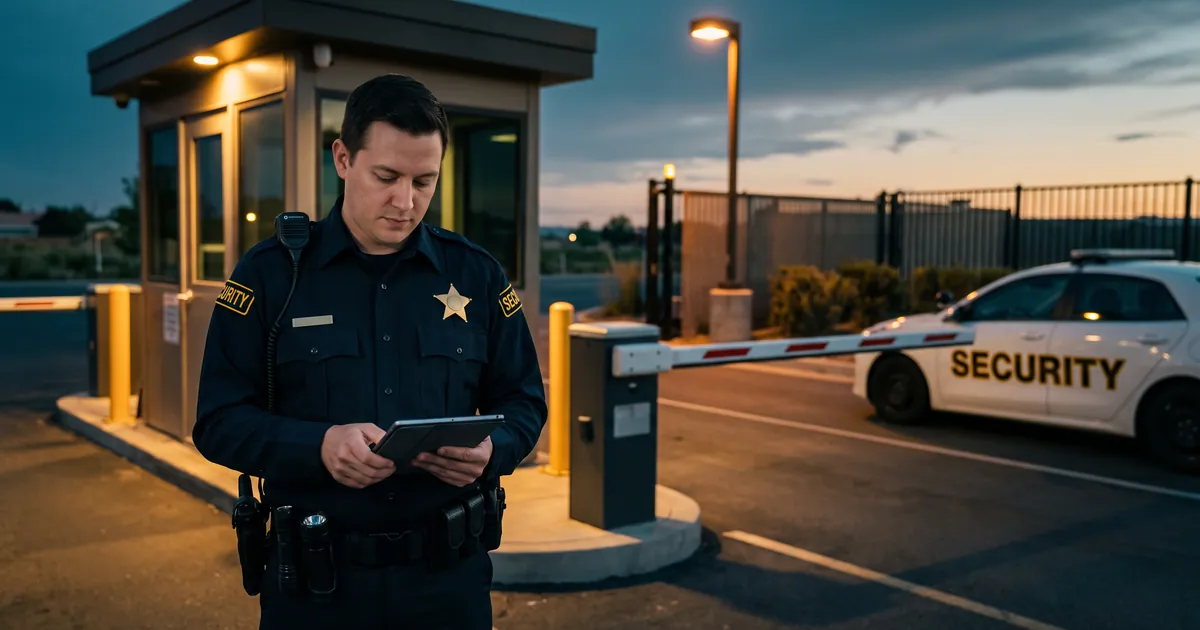
Lone security guard safety depends on a simple promise: if an officer working alone gets into trouble, someone will notice quickly and know what to do. Guard companies keep that promise with a written plan for each solo post, covering the risks at the site, a fixed check-in routine, clear rules for when to step back and a named person who acts when an officer goes quiet.
Key points#
- Assess every solo post on its own, at the hours it is actually staffed.
- Set a check-in routine and write down exactly what happens when a check-in is missed.
- Tell officers plainly when to step back, leave the area and call for help.
- Give every officer one number that is always answered, on every shift.
- Review each threat and near miss, then change the post if the risk has changed.
Why solo posts need their own plan#
An officer alone at a warehouse at 3 a.m. has no partner to back up a decision, call for help or notice a fall. The same officer, doing the same job on a staffed day shift, is in a very different position.
That is why a general safety policy is not enough. A company handbook can set the standard, but only a plan written for the post tells an officer what to do at that gate, in that parking lot, at that hour.
Solo work is common in guarding because many clients pay for one officer on a post. You may not be able to change that. You can change how well that officer is supported.
Step 1: Assess each post at its real hours#
Visit the site at the time the officer will be there. A site that seems calm at noon can look very different after dark. Walk the route the officer will walk and write down what you find:
- Where lighting is poor, and which areas cannot be seen from the road
- Where phone signal is weak or missing
- Who else is on site at that hour, if anyone
- What has gone wrong here before, from the client and from your own reports
- How far away help is, and how a responder would get in through locked gates
Then ask the hard question: should this post have one officer at all? If the risk is high, take your findings to the client and propose a second officer, a change in hours or a different way to cover the site. Put your recommendation in writing.
Step 2: Set a check-in routine#
A check-in tells you the officer is fine. Decide how often it happens, based on the risk at the post. A quiet indoor post might need fewer check-ins than an outdoor post in a high-crime area.
Keep the method simple enough to work at 4 a.m. A phone call to a supervisor, a radio check or a scheduled patrol scan can all serve, as long as somebody is really watching for it. A check-in nobody reviews gives you false comfort.
Good patrol records help here. With guard tours, a patrol that was due and did not happen becomes something a supervisor can see and ask about.
Step 3: Write down what silence means#
Most plans say when to check in. Fewer say what happens when an officer does not. Decide this in advance and write it down as a short ladder:
- How many minutes pass before someone tries to reach the officer
- Who calls, and by which methods
- How long they keep trying before they escalate
- Who goes to the site or contacts the client's on-site contact
- When to call emergency services and what to tell them
Name a role for each step, such as the on-duty supervisor, and make sure that role is covered on nights, weekends and holidays. Keep the site address, gate codes and access details where the person responding can find them fast.
Step 4: Tell officers when to step back#
Officers want to do the job well, and a solo officer can feel that walking away is failing the client. Your instructions should remove that doubt. Put the rule in the post orders in plain words: the officer's job is to observe, report and call for help, and no property is worth getting hurt over.
Be specific about the situations that matter at that post. Examples include a person who will not leave, a group gathering in the parking lot, a door found open or an argument that is getting louder. For each one, say what the officer should do and at what point to move to a safe place and call.
Step 5: Train for being alone#
Training should reflect the fact that nobody is standing next to the officer. Cover these basics before the first solo shift:
- Spotting early signs that a person is becoming dangerous
- Talking to someone calmly while keeping distance and a way out
- Giving a clear location and description to a 911 operator
- Knowing the site's exits, safe rooms and blind spots
- Basic first aid, and where the kit is
A new officer should work the post with an experienced colleague first, including at the hours they will later work alone.
Step 6: Learn from every near miss#
A threat that ended well is still useful information. Ask officers to file an incident report for threats, confrontations and anything that made them feel unsafe. Then read those reports as a group, by site.
Make it safe to report. If officers think a report will count against them, you will only hear about the problems that can no longer be hidden. When a report leads to better lighting or a changed patrol route, tell the team.
Review each solo post at least once a year, and again after any serious incident or change at the site. Ask an attorney or your state workplace safety agency what rules apply to your company, because they differ from place to place.
Frequently asked questions#
How often should a security guard working alone check in?#
There is no single right number. Set it by the risk at the post, with more frequent check-ins at outdoor sites, at night and in areas with a history of trouble. Whatever you choose, make sure someone is watching for each check-in and knows what to do if it is missed.
What should happen if a lone officer misses a check-in?#
Follow a written ladder: try to reach the officer, escalate to a named supervisor after a set number of minutes, send someone to the site and call emergency services when the plan says so. Decide the times in advance, so nobody has to invent the process during a crisis.
Should a security officer confront someone when working alone?#
An officer should follow the post orders and company policy, and those should make safety come first. In general, a solo officer's job is to observe, report and call for help. If a situation is becoming dangerous, the officer should move to a safe place and call.
When should a guard company recommend a second officer?#
Recommend one when your site assessment shows a risk that a single officer cannot safely manage, such as repeated threats, an isolated location or no reliable way to call for help. Share the findings with the client in writing and offer other options, such as different hours.
- Officer safety
- Operations
- Post orders