Industry Knowledge
Security guard onboarding: a first-week plan for guard companies
Security guard onboarding that works: what to do before day one, how to run a site handover and how to check a new officer during the first shifts.
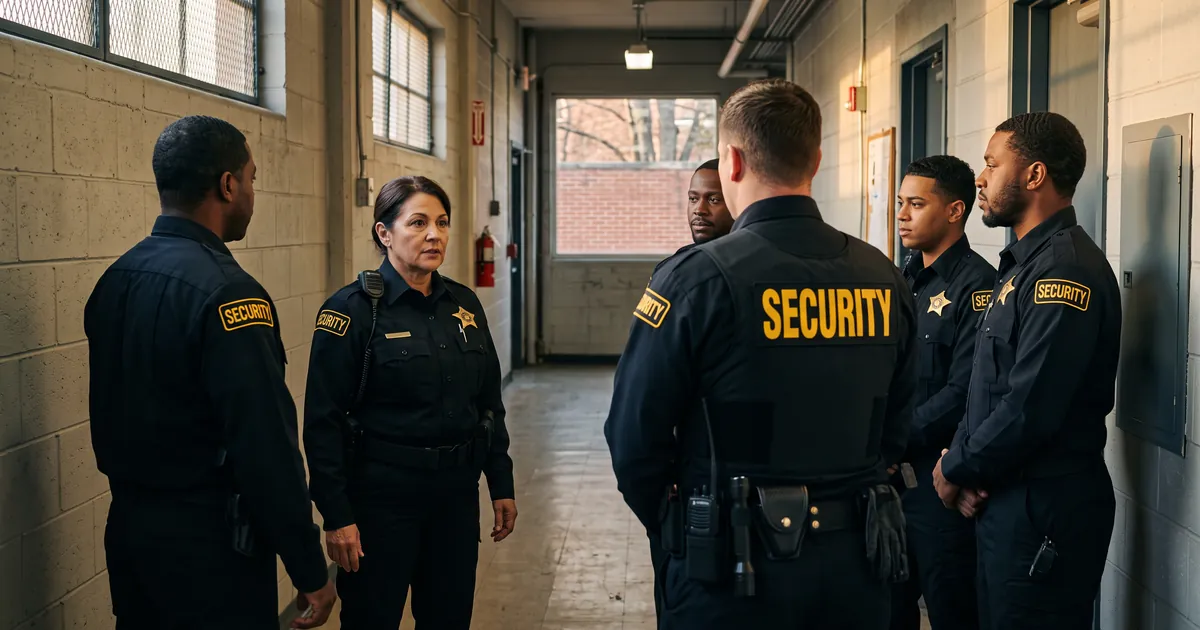
Security guard onboarding is the set of steps that takes a newly hired officer from a signed offer to working a post alone with confidence. A good plan covers paperwork before the first shift, a real site handover, supervised shifts and a planned check-in at the end of the first week. Done well, it protects the client relationship and gives a new hire a reason to stay.
Key points#
- Finish license checks, documents and uniform issue before the officer's first shift.
- Give each new officer a named person to contact during the first week.
- Teach the site on the site, with the post orders in hand and a walk of every route.
- Have the officer shadow a shift, then work one while being observed.
- Hold a short, planned check-in at the end of the first week and act on what you hear.
Why onboarding deserves a written plan#
Guard companies hire often, so onboarding happens under pressure. A post opens, a new hire is available and the fastest option is to send that person straight to the site. The officer arrives without knowing who to call, where the keys are or what the client expects.
The client notices. So does the officer, who may conclude that the company does not plan ahead. A written plan costs little and makes the first week the same for every hire, no matter which supervisor is on duty.
Before the first shift#
Treat the time between the job offer and the first shift as part of the job.
Confirm the license and documents. Licensing rules vary by state, so check what your state agency requires before an officer can work a post, and confirm the license is valid. Collect copies of licenses and certificates with their expiry dates, so renewals do not catch you later.
Issue the uniform and equipment. Record what was handed over and when. An officer who arrives without a complete uniform starts the relationship with the client badly.
Assign a contact. Name one supervisor the new officer can call. Give the number in writing and tell the officer when that person is on duty.
Explain the basics of the job. Cover how to clock in, how to report a late arrival, how to request time off and how pay works. These questions cause more early frustration than the post itself.
Set up the tools. If officers use a phone app, have them sign in and practice before they reach the site. A first shift is the wrong time to learn a password reset.
The site handover#
Every site has its own habits, and no classroom can teach them. Plan a handover led by someone who knows the post.
Start with the post orders. The new officer should read them before the walk, then see each instruction in place. Ask them to explain a few duties back to you, since reading a page does not prove it was understood.
Walk the whole site together and cover:
- Entrances, exits, gates and which ones stay locked
- Patrol routes and any checkpoints along them
- Fire panels, alarm points, water and power shutoffs
- Key control and where keys are signed for
- Parking rules, loading areas and known trouble spots
- Who the client contacts are and how they like to be reached
Finish with the emergency plan: who to call first, in what order, and when the officer should leave the area and wait for responders.
Shadow first, then be observed#
A useful pattern has two steps. First the new officer shadows an experienced one for a shift and watches how the post really runs. Then the roles switch: the new officer does the work while the experienced one observes and steps in only when needed.
Use a simple checklist so the observation is fair. Did the officer arrive on time and in full uniform? Did they complete the patrol? Could they find the emergency numbers? Could they write a clear report about something that happened on the shift?
Practice report writing during this stage. Ask the officer to write up one ordinary event and review it together. Short, factual sentences about who, what, where and when are the goal, and it is easier to teach that now than after a serious incident.
Build this time into the schedule and into your bid where you can. Overlap shifts are real labor, and they are easy to cut when a manager is short of people, which is usually when they matter most.
The end-of-week check-in#
Put a short conversation on the calendar before the officer starts, and hold it even if everything seems fine. Ask three things: what was harder than expected, what they still do not know, and whether anything about the site or the schedule worries them.
Then do something with the answers. If the officer needs another walk of the site, schedule it. If the client contact was rude, deal with it. A new hire who raises a problem and sees nothing happen is unlikely to raise the next one.
Ask the client for a quick impression as well. A brief call shows the client that you are paying attention, and it may reveal a problem early.
Training that continues after week one#
Onboarding should lead into ongoing training, not stop when the officer starts working alone. Set the next steps early: any state-required hours, refreshers on report writing and use-of-force policy, and site-specific updates when post orders change.
Your state agency sets the required training hours, and the rules differ widely. Confirm them with the agency or an attorney, and keep records that show who completed what and when.
A simple first-week checklist#
- License verified, documents collected, uniform issued.
- Named supervisor and phone number given in writing.
- Time clock, reporting and pay explained.
- Post orders read and explained back.
- Full site walk completed with emergency plan.
- One shift shadowing, one shift observed.
- One practice report reviewed.
- End-of-week check-in held, and client asked for feedback.
Frequently asked questions#
What should security guard onboarding include?#
It should include license and document checks, uniform issue, a named supervisor, an explanation of timekeeping and pay, a guided site walk, supervised shifts and a check-in at the end of the first week. Each site should also have its own handover.
How long should a new security officer shadow before working alone?#
There is no single rule, because it depends on the site and on your state's training requirements. Many companies start with at least one shadow shift and one observed shift, then add more for complex sites such as hospitals or high-traffic properties.
Who should run the site handover?#
Someone who works the post regularly should run it, with a supervisor confirming that it happened. An experienced officer knows the habits of the site that the written post orders may not capture.
What is the most common onboarding mistake?#
Sending a new hire straight to a post without a site walk is a common one. The officer does not know the routes, the contacts or the emergency steps, and the client sees that on the first day.
- Hiring
- Training
- Operations