Industry Knowledge
Lone worker safety for security guards: a plan for solo posts
Lone worker safety for security guards: how to assess a solo post, write clear post orders, set check-in times and plan the response when an officer goes quiet.
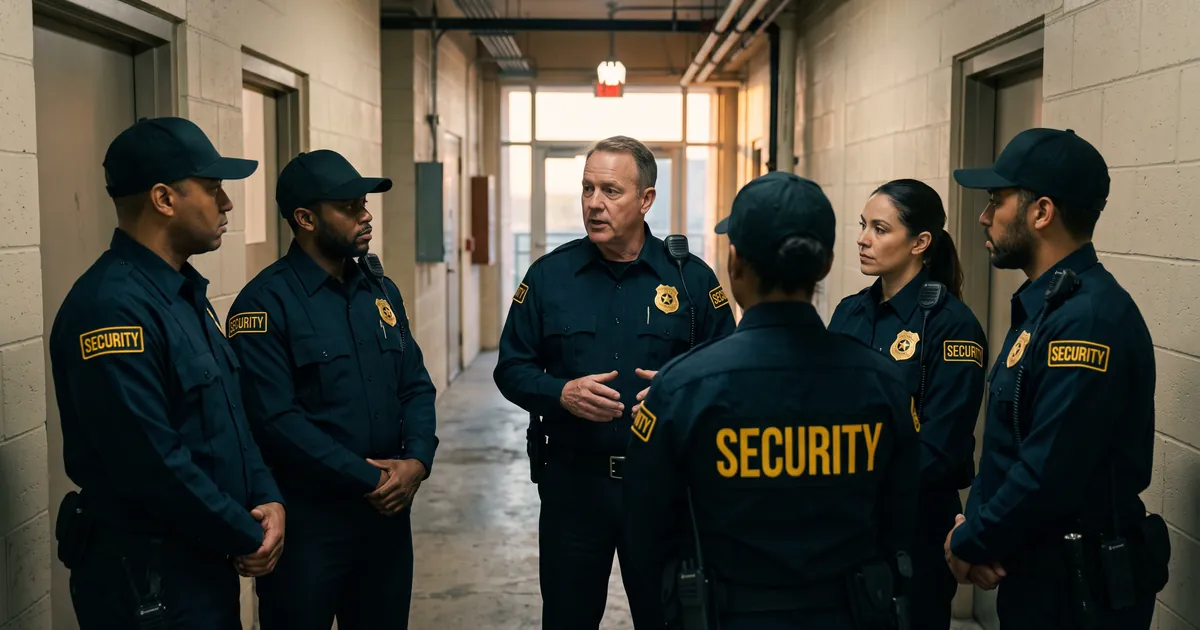
Lone worker safety for security guards comes down to four things: know the risks of each solo post, tell the officer exactly what to do, check on them at set times, and know who acts when a check-in is missed. Many guard companies have officers working alone at night, so this plan belongs in every account, not only the risky ones.
Key points#
- A solo post needs its own risk review, because one officer has no partner to call for help, watch their back or report what happened.
- Post orders for a solo post should say what the officer may do, what they must not do, and when to step back and call for help.
- Set check-in times for every solo shift, and decide in advance what the supervisor does when a check-in is missed.
- Train officers for working alone before the first solo shift, and keep a record of who has finished that training.
- Review solo posts after every incident and at least once a year, because sites, tenants and risks change.
Why solo posts need their own plan#
A team of two can split the work: one officer deals with a person at the door while the other calls for help. Alone, the officer does both, and nobody notices quickly if something goes wrong.
That is why a solo post is a different job from the same post staffed by two people. The officer needs clearer limits, a simpler way to raise an alarm and a supervisor who knows when to expect news.
Step 1: Assess each solo post#
Walk the site with the hours the officer will actually work. A loading dock at noon is a different place in the middle of the night.
Write down:
- Who is around. Tenants, cleaners, delivery drivers, the public, or nobody at all.
- What has happened before. Past incidents, trespassing, theft, threats against staff.
- Where help comes from. The nearest police station, the client's own staff, the next officer on another site.
- Where the officer can go. A safe room, a locked office, a place with a signal.
- Weak spots. Dark corners, broken lights, doors that do not lock, places with no phone signal.
Some posts should not be solo at all. If the review shows the officer would face a real risk of violence with no way to get help quickly, talk to the client about a second officer, a shorter shift or other changes.
Step 2: Write post orders for working alone#
Post orders for a solo post should answer the questions an officer has when nobody else is there:
- What is my job here, and what is not? Observe and report, or also stop people at the gate.
- When do I step back? For example: do not follow a person off the property, do not confront a group, leave a place that feels unsafe.
- Who do I call, in what order? Emergency services first in an emergency, then the supervisor, then the client contact.
- What do I record? Times, places, descriptions, who was called.
Keep the limits short and plain. An officer who has to read pages of rules in the middle of the night will not. Have an attorney review the use of force rules for your state.
Step 3: Set check-ins and a missed check-in plan#
Check-ins are how a supervisor knows an officer is fine. Set them by time (every hour, for example) or by event (start of shift, each patrol round, end of shift).
The more important part is the plan for a missed check-in:
- First call. The supervisor calls the officer right away.
- Second try. If there is no answer within a few minutes, try again and try the client contact on site.
- Send someone. If there is still no answer, send the nearest supervisor or officer, or call the police if the site is high risk.
- Record it. Write down every step and the times, even when it turns out the phone was on silent.
Agree on the times with the client and put them in the post orders, so everybody knows what normal looks like.
Logged patrol tours help here too. When an officer scans checkpoints on a round, a supervisor can see the last place they checked in.
Step 4: Train for solo work#
Basic guard training does not always cover working alone. Before the first solo shift, cover:
- how to read a situation and back away early;
- how to talk to an angry person without making it worse;
- how and when to raise an alarm;
- what to do after an incident, including writing the report.
Repeat it once a year, and keep a record of who finished it, so you never put an untrained officer on a solo post by mistake. A training record that sits next to the schedule makes that check easy.
Step 5: Start and end the shift on the record#
A clear start and end to each shift matters more when the officer is alone. A clock-in at the site tells the office the post is covered. A missing clock-in at the start of a night shift is the first sign to act on, before anything else goes wrong.
At the end of the shift, the officer hands over: what happened, what is still open, anything the next officer must know.
Step 6: Review after every incident#
After any threat, injury or near miss on a solo post, ask three questions:
- Did the post orders tell the officer what to do?
- Did the check-in plan work, and how fast did help arrive?
- Should this post still be solo?
Write down the answers and change the post orders. Then tell every officer who works that post.
Frequently asked questions#
What is a lone worker in security?#
A lone worker is an officer who works without a colleague nearby, such as a night guard at a warehouse, a single officer in a lobby or a mobile patrol driver. They have nobody on site to help or to raise the alarm if something goes wrong.
How often should a lone security guard check in?#
There is no single rule. Many companies set a check-in at the start and end of the shift and at fixed times in between, such as every hour or after each patrol round. Agree on the times with the client, write them in the post orders and check what your state and insurer require.
What should happen when a lone guard misses a check-in?#
The supervisor should call right away, try again after a few minutes, contact someone on site and then send a person or call the police if there is still no answer. Every step and its time should be recorded, even when it was a false alarm.
Should some security posts never be solo?#
Yes. If a site review shows a real risk of violence and no fast way to get help, a second officer, a shorter shift or other changes may be needed. Discuss the options with the client and write the decision down.
- Officer safety
- Operations
- Night shifts