Industry Knowledge
Fire watch security guard: how to staff, run and log a fire watch post
Fire watch security guard posts explained: when a site needs one, what officers do on each round, and how to log it so the client and fire marshal trust it.
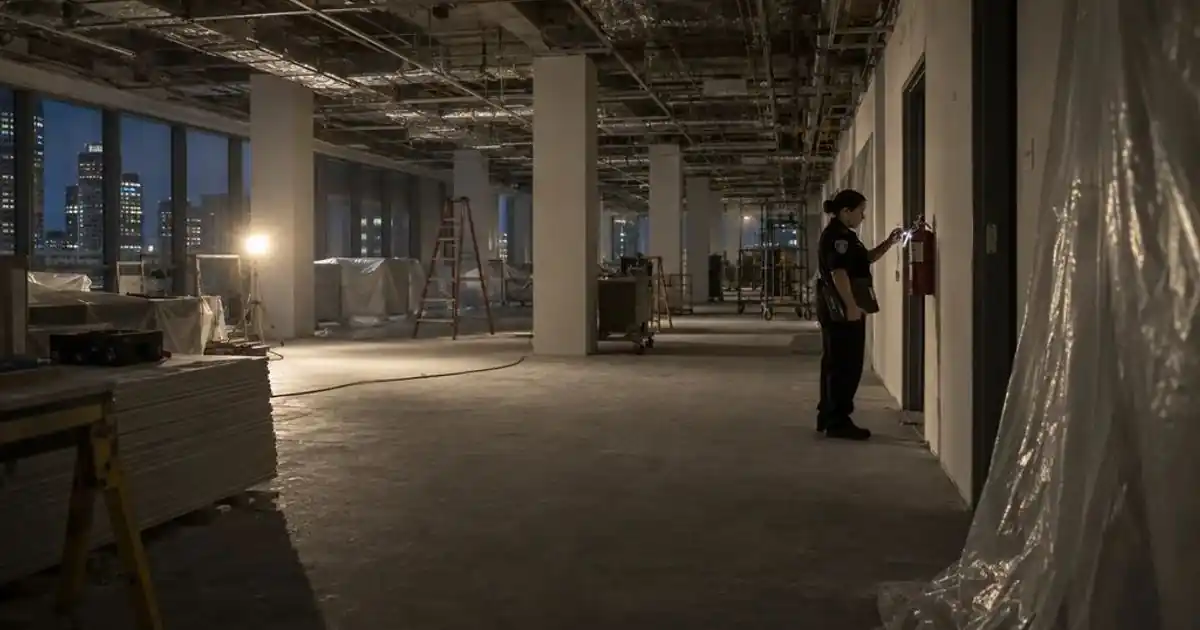
A fire watch security guard walks a building on a set schedule when its fire protection cannot be trusted on its own, looks for fire and fire hazards, and calls for help at the first sign of trouble. It is one of the most rule-bound posts a guard company can take on, because the local fire official, not only the client, decides what the watch must do. This guide covers when a site needs one, how to staff it and how to keep a log that holds up.
Key points#
- A fire watch is ordered or requested when a building's alarm or sprinkler system is out of service, during hot work, or when a fire official asks for one.
- The local fire marshal or fire official usually sets the rules for the watch, so get those rules in writing before the first shift.
- A fire watch officer's main job is to look, report and alert: walk the route, spot hazards, call the fire department and help people leave if needed.
- The log is the proof: each round, each hazard found and each call made, with the time, written while the shift is running.
- Post orders for a fire watch should name the route, the round interval, the emergency numbers and who to call when the system comes back.
When a site needs a fire watch#
Fire watch requests tend to come from a few situations. The fire alarm or sprinkler system is shut down for repair, testing or an upgrade. A contractor is doing hot work, such as welding or cutting, near materials that can burn. A building has a known fire code problem that cannot be fixed at once. Or the fire department arrives after a system failure and tells the owner that someone must watch the building until it is repaired.
In each case, the watch stands in for a system that is not doing its job. That is why fire officials take it seriously, and why a missed round can matter more than on an ordinary patrol post.
The rules differ by city, county and state. Some fire officials give the owner a written order with the round interval and the areas to cover. Others refer to the fire code the jurisdiction has adopted. Before you quote the job, ask the client for the order or the fire official's contact, and check the local requirements with the fire marshal's office.
What to agree on before the first shift#
A fire watch is often booked in a hurry, sometimes the same evening a system fails. Take a few minutes to get these answers anyway:
- Who ordered it and why. The fire official, the insurer, the client's own policy or a contractor's permit. Ask for the paperwork.
- The areas to cover. Every floor, the areas served by the out-of-service system, or only the hot work zone.
- The round interval. How often the officer must pass each area, as set by the fire official or the client.
- How long it lasts. Until the system is repaired and tested, until the hot work ends plus a cool-down period, or for set dates.
- Who ends it. Only a named person (often the fire official or the client's facility manager) should be able to say the watch is over. Get that in writing too.
- The officer's limits. Agree whether the officer only calls the fire department or may also act on a small fire. Write down what equipment, if any, the officer may use, and what training it needs.
Put all of it in the site's post orders, so every officer who works the post reads the same rules.
Staffing a fire watch post#
A fire watch officer must stay awake, alert and on the move for the whole shift. That shapes how you staff it:
- Pick officers who know the building, or give a new officer a walk of the route with someone who does. Stairwells, roof access, mechanical rooms and loading docks are the places a newcomer misses.
- Plan for relief. A fire watch does not stop for meals or breaks unless someone covers the route. Schedule overlap or a relief officer for long shifts.
- Keep the phone charged and the numbers ready. The officer needs a working way to call the fire department and the client contact from anywhere on the route.
- Brief every shift. The outgoing officer tells the next one what was found, what was reported and what is still open. A written pass-down helps.
Fire watch work is often short notice and can run for days or weeks. Keep a list of trained officers who can take the post, and check their licenses and site training before you send them.
What the officer does on each round#
A round is more than walking past each door. On every pass the officer should:
- Look and smell for fire or smoke, including behind closed doors where access is allowed.
- Check exits and paths. Exit doors open, exit signs and corridors clear, stairwell doors closed and not propped.
- Watch for hazards. Blocked fire doors, stored materials near heat sources, damaged wiring, open flames, smoking where it is banned.
- Check the hot work zone, if there is one, during the work and for the cool-down time the permit sets.
- Write it down before moving on: the time, the area and what was seen, even when everything was fine.
If the officer finds fire or smoke, the order is simple: call the fire department, alert the people in the building using the method in the post orders, help them leave by the safe exits, and then call the client contact. The officer should not wait to confirm a fire before calling.
Keeping a fire watch log that holds up#
The log is how the client, the insurer and the fire official know the watch happened. A good log has:
- The site, the date, the officer's name and the shift times.
- One line for each round, with the time and the areas covered.
- Every hazard found, what the officer did about it and who was told.
- Every call made to the fire department or the client.
- The handover to the next officer, and the name of the person who ended the watch.
Write each entry during the round, not at the end of the shift. A log filled in from memory, with every round at a neat interval, is the first thing a fire official or an attorney will doubt.
Patrol tools help here. With guard tours, officers scan a checkpoint in each area as they pass it, which gives a time-stamped record of each round. Hazards and calls belong in a report with photos, so the client sees what was found, not only that the officer walked by.
Billing and the contract#
Fire watch jobs often start before a contract is signed. Send a short written agreement the same day with the rate, the minimum hours, the start time, the areas, who can end the watch and how changes are approved. Agree in writing on how overtime and holiday hours are billed, since a repair can run longer than planned.
Ask an attorney to review your fire watch terms once, so you can reuse them the next time a client calls at night.
Frequently asked questions#
What does a fire watch security guard do?#
A fire watch security guard walks the building on a set schedule while its fire protection is out of service or hot work is going on. The officer looks for fire and hazards, keeps a written log of every round, calls the fire department at the first sign of fire and helps people leave safely.
How often does a fire watch officer make rounds?#
The local fire official or the client usually sets the interval, and it differs by jurisdiction and by site. Get the interval in writing before the first shift, put it in the post orders and log each round with its time.
Who decides when a fire watch can end?#
Usually the fire official who ordered it, or the client's named facility contact once the system is repaired and tested. The officer should not end the watch on their own. Write down who has that authority before the watch starts.
Can a security officer fight a fire on a fire watch?#
That depends on the client's rules, the local requirements and the officer's training. A common rule in fire watch post orders is to call the fire department first and focus on alerting people and keeping exits clear. Check the rules with the client and the fire marshal's office.
- Fire watch
- Post orders
- Patrols