Industry Knowledge
Security guard overtime rules: how to keep overtime under control
Security guard overtime rules in plain words: the federal 40-hour workweek, California's daily overtime, and the scheduling habits that keep it in check.
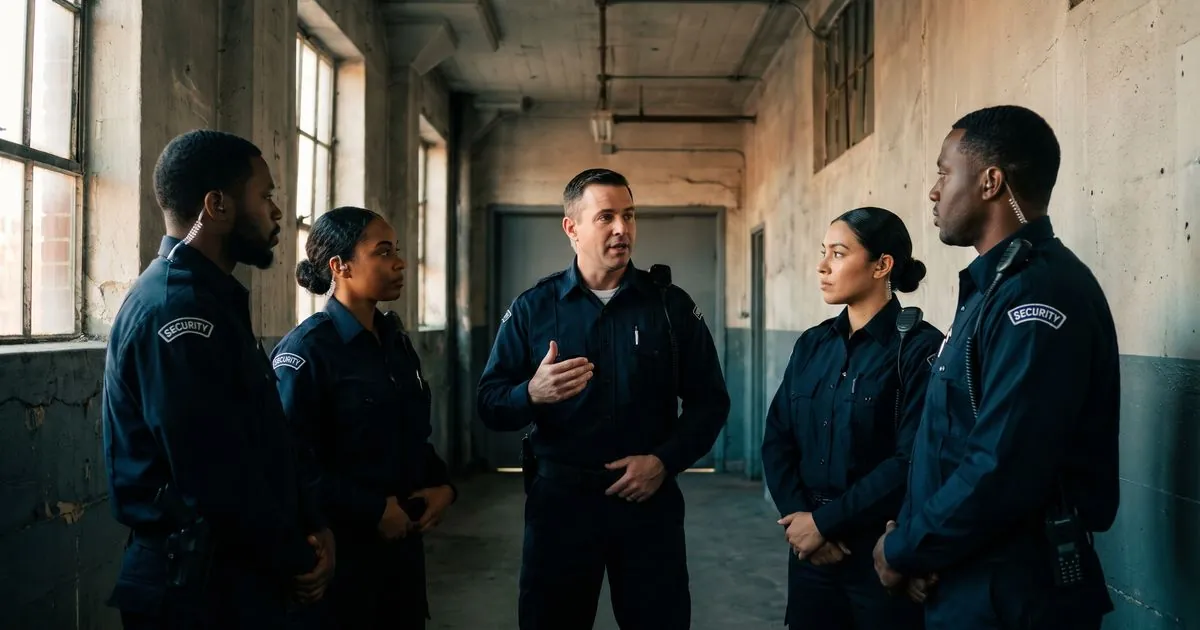
Security guard overtime rules start with the federal Fair Labor Standards Act, which counts hours by the workweek, and some states, such as California, also count them by the day. In a guard company, overtime rarely comes from one decision. It builds up from callouts, double shifts and handoffs that run long, so most of the fix is in the schedule.
This guide explains the basics in plain words. It is not legal advice: rules differ by state and by employee, so confirm yours with an employment attorney or your state labor agency.
Key points#
- Federal law requires at least one and a half times the regular rate for hours worked over 40 in a workweek (29 U.S.C. 207).
- Each workweek stands alone, so a light week cannot be averaged against a heavy one (29 CFR 778.104).
- California adds daily overtime: time and a half after 8 hours in a workday and double time after 12 (California DIR).
- Work an officer does before or after the shift counts when the employer knows or has reason to believe it is happening (29 CFR 785.11).
- Overtime is easiest to control in the schedule, before the shift starts, not on payroll day.
The federal baseline: 40 hours in a workweek#
Under the Fair Labor Standards Act, a covered employee who works more than 40 hours in a workweek must be paid at least one and a half times the regular rate for the extra hours, the statute says. Some employees are exempt, so the classification of each role matters.
The workweek is a fixed, recurring period of 168 hours, or seven consecutive 24-hour periods. It does not have to match the calendar week, but once it is set it stays fixed, the federal rules explain.
Each workweek stands alone. An officer who works 30 hours one week and 50 the next is owed overtime for the second week, even though the two weeks average 40, 29 CFR 778.104 says. A paycheck that covers two weeks still has to be checked one week at a time.
The same rules say the employer totals all the hours an employee works in the workweek, even for unrelated assignments, 29 CFR 778.103 says. An officer who covers two of your sites in one week has one total, not two.
The regular rate is more than the base wage#
Overtime is figured on the regular rate, and the regular rate includes all pay for employment except payments the law specifically excludes, 29 CFR 778.108 says. It is found by dividing the week's pay by the hours actually worked that week.
California's labor agency gives shift differentials and nondiscretionary bonuses as examples of pay that counts toward the regular rate, the DIR explains. A night differential or an attendance bonus can raise what every overtime hour costs.
Hours you did not plan still count#
Work that was not requested but was allowed is still work time when the employer knows or has reason to believe it is happening, 29 CFR 785.11 says. The same rules add that a written policy against such work is not enough: management has to enforce it.
In a guard company, this shows up at shift change. An officer who arrives early for a handoff, waits for a late relief officer or stays to finish a report may be working, and those minutes can push the week past 40.
States can add stricter rules: the California example#
Federal law sets a floor. Where state or local law requires overtime on a different basis, complying with that law does not excuse breaking the federal one, and the federal rules do not cancel the state law, 29 CFR 778.5 explains. In practice, a company has to meet both.
Under California's general overtime rules, a nonexempt adult employee must receive, the DIR says:
- Time and a half for hours over 8 in a workday, up to and including 12
- Time and a half for hours over 40 in a workweek
- Time and a half for the first 8 hours on the seventh consecutive day of work in a workweek
- Double time for hours over 12 in a workday
- Double time for hours over 8 on the seventh consecutive day
That changes how a 12-hour post costs out. Under the general rule, hours 9 through 12 of each shift are overtime in California, even in a week with only three shifts, the DIR's rules show. California's wage orders also provide for alternative workweek schedules, such as four 10-hour days or three 12-hour days, with their own method of computing overtime, the agency notes. Talk to an attorney before you set one up.
Other states have their own overtime rules. Check with the labor agency in every state where you have officers.
Where guard company overtime comes from#
Before changing anything, look at last month's overtime and ask where each hour came from. In guard companies, the same causes tend to come up:
- Callouts and no-shows covered by the officer already on post
- Double shifts to fill a post nobody else could take
- Late relief, which keeps the outgoing officer on site
- Officers spread across sites, whose hours nobody totals until payroll
- Last-minute client requests for extra coverage
Scheduling habits that keep overtime in check#
- Set each officer's weekly hours. Know who is close to 40 before you assign one more shift, not after.
- Schedule on the payroll workweek. Build and review schedules on the same fixed workweek you use for pay, so the totals match.
- Cost 12-hour posts by state. In a state with daily overtime, a long post costs more than its hours suggest, so build that into your bill rate.
- Keep a bench for every site. A short list of trained relief officers stops a callout from turning into a double shift.
- Approve swaps and open shifts with the totals in view. A swap that looks harmless can push one officer into overtime.
- Put handoffs in the schedule. Decide how long a handoff takes and plan it, so the time is expected and recorded.
- Act on late clock-ins. A late relief officer is often why the outgoing officer stays.
- Write overtime into client contracts. Short-notice requests should carry their own rate, agreed before the work.
How scheduling software helps#
The habits above are easier when the schedule shows the problem before the shift is published. In Guardix, when a manager assigns a shift, the app flags clashing shifts and approved time off, and warns when the shift would put the officer over their set weekly hours.
Before publishing, managers see a preview that warns about open shifts and understaffed shifts. Officers claim open shifts in the app and a manager approves or declines, and a shift swap needs the other officer to accept before a manager approves it. Managers are alerted when an officer is late to clock in, and a payroll run can be downloaded as an Excel or PDF file.
Frequently asked questions#
Do security guards get overtime?#
A covered, nonexempt security guard is owed at least one and a half times the regular rate for hours over 40 in a workweek under federal law, the statute says. Some states add daily overtime. Exemptions exist, so confirm how your officers are classified with an attorney or your state labor agency.
Can a guard company average hours over a two-week pay period?#
Not under federal law. Each workweek stands alone, so 30 hours one week and 50 the next still means overtime for the second week, 29 CFR 778.104 says.
Do security guards in California get overtime after 8 hours?#
California's general rule requires time and a half for a nonexempt adult employee's hours over 8 in a workday and double time over 12, the DIR says. Exemptions and alternative workweek schedules can change this, so confirm with the state or an attorney.
Does shift handoff time count as hours worked?#
Time an officer spends working before or after the scheduled shift counts when the employer knows or has reason to believe the work is happening, 29 CFR 785.11 says. Planning the handoff into the schedule keeps that time expected and recorded.
Sources#
- GovInfo: 29 U.S.C. 207, Maximum hours, January 3, 2024
- GovInfo: 29 CFR 778.103 to 778.105, the workweek, July 1, 2025
- GovInfo: 29 CFR 778.107 to 778.109, the regular rate, July 1, 2025
- GovInfo: 29 CFR 778.5, relation to other laws, July 1, 2025
- GovInfo: 29 CFR 785.11 to 785.13, work suffered or permitted, July 1, 2025
- California Department of Industrial Relations: Overtime frequently asked questions, March 23, 2007
- Overtime
- Payroll
- Scheduling